Man and Van Derby: What an Hour Actually Buys You
In a city this compact, almost none of your hourly booking is spent driving. A cross-Derby run is often under fifteen minutes, which means you are paying for stairs, doorways and the walk to the van. Here is what a man and van in Derby costs, which DE areas drivers cover, and how to keep the clock honest.
How much does a man and van in Derby cost?
Hourly, with a minimum of an hour or two. National estimates put a solo driver near £64 an hour and around £78 with a second person (Checkatrade, 2026). Treat that as a guide — Derby operators frequently price under a figure weighted by London.
What is unusual here is the split. In most cities a chunk of the hourly rate goes on driving; in Derby it barely does. Loading, carrying and unloading are nearly the whole job, which means the access at both ends decides your bill almost entirely.
Past a two-bed the hourly model stops working in your favour and a fixed-price crew moves more per hour. The removal costs guide lists prices by property size and the cost calculator will check a quote.
Where the hour actually goes
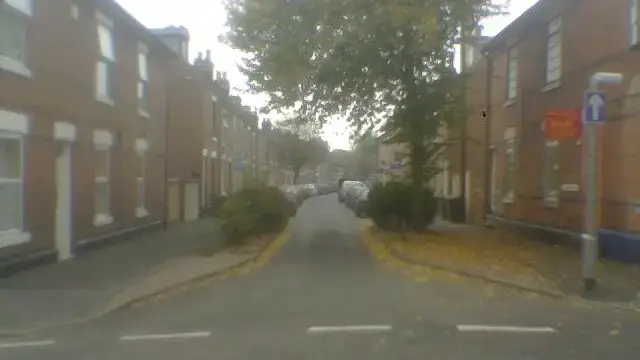
Think of a short move as three carries and a drive, not a journey. If both ends have a driveway, a two-hour booking is realistic for a small flat. If one end is a Normanton terrace with no parking, add an hour for the same load.
That is why two firms quoting the same job can differ so much. One has looked at the street; the other has looked at the mileage.
- Say whether there is off-street parking at each end — it is the single biggest variable.
- Name the floor, and whether the staircase turns.
- Give your heaviest item rather than a box count.
- Mention permit restrictions; a suspension sometimes beats circling.
Get man and van quotes in Derby
Which DE areas do drivers cover?
The city as standard: Normanton, Littleover, Mickleover, Chaddesden, Allestree, Oakwood, Alvaston. Short hops between these are the bread and butter.
DE then reaches well into Derbyshire. Ashbourne is DE6, Belper DE56, Ilkeston DE7, and the Peak fringe villages sit inside it. A firm covering DE might work the county or just the city — worth asking outright.
For anything leaving the region it stops being an hourly job. Long runs get a fixed price built around the return leg, which is a different calculation entirely.
Which van size fits your load?
A short-wheelbase Transit takes a student room or a few large pieces. A long-wheelbase suits a studio or a tight one-bed. A 3.5-tonne Luton with a tail-lift handles a one or two-bed flat.
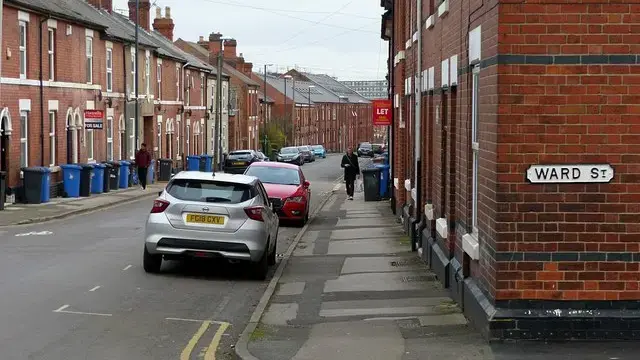
On the older terraced streets west of the centre, a Luton can be awkward to position and the tail-lift needs level ground. Where kerb space is tight, a smaller van doing two runs often finishes sooner than a bigger one that cannot park.
When to stop booking hourly
Derby stretches the hourly model further than most cities, because the drives are so short. A small three-bed across town can genuinely work on an hourly crew, where in a larger city it would not.
Above that, switch. Compare removal companies in Derby for a fixed price, and if the job is really clearing a property rather than moving one, house clearance firms quote that separately.
Booking it properly
Compare several prices — the spread on identical short moves is wider than people expect, because firms read access differently.
- Book the first slot of the day on any terraced street.
- Be specific about both ends, not just the one you are leaving.
- Ask the minimum booking and whether part-hours round up.
- Check fuel and waiting time are inside the quote.
- Mid-week and mid-month dates price better than month-end Fridays.
When Derby drivers are busiest
Two rhythms to plan around. The university term turns over the rental streets near the city centre in June and again in September, and those fortnights take most of the hourly capacity.
The other is employment. Work relocations here often land mid-month rather than at a completion date, which oddly makes Derby a little easier than most cities for finding a month-end slot — the demand is spread differently.
Either way, a fortnight's notice is usually enough for a small hourly job outside the student weeks, and four weeks is comfortable for anything larger.
One more Derby-specific point: because so many local moves are short, some drivers will quote a flat price for a well-defined job rather than an hourly rate. If your move is small and both ends are straightforward, it is worth asking whether they will — a fixed figure removes the only real downside of booking by the hour.
What the hourly rate does not include
Worth knowing what you are not buying. The hourly rate covers a driver, a van and the labour; it does not normally include packing materials, and it rarely includes dismantling and rebuilding furniture unless you ask.
Boxes, tape and blankets are usually either hired or bought separately, and some drivers carry a supply while others expect you to have your own. Ask which before the day rather than discovering it at eight in the morning with nothing packed.
Dismantling is the other one. A bed frame or a flat-pack wardrobe that needs taking apart is time on the clock, and a driver who has not been told about it may not carry the right tools.