Man and Van Inverness: City Prices, Highland Distances
Inverness itself is one of the easier cities in Scotland to move within — compact, modern estates, room to park. IV as a whole is the largest postcode area in Britain and includes Skye, so the same two letters cover a ferry and forty miles of single-track road. Here is what a man and van in Inverness costs.
How much does a man and van in Inverness cost?
Hourly, with a one or two-hour minimum. National estimates put a solo driver near £64 an hour and about £78 with a second person (Checkatrade, 2026). Highland operators vary more than most, because their costs depend heavily on how far they travel to reach you.
Within the city the usual four apply and none of them bite hard. Inverness is compact, the estates at Culloden and Milton of Leys have driveways, and even the older streets around Crown are manageable. Short distances keep hourly bookings honest here.
Past a two-bed a fixed-price crew is cheaper per item — compare removal companies in Inverness for that. The removal costs guide lists prices by property size and the cost calculator will check a quote.
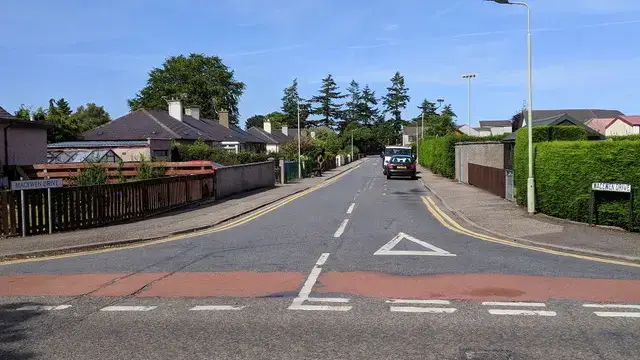
Single-track roads and the last mile
Once a job leaves Inverness the arithmetic changes. Single-track roads with passing places are normal rather than exceptional, and a fifty-mile move through the glens takes considerably longer than fifty miles elsewhere.
The constraint is almost always the last mile rather than the distance. Whether the road to the house is single-track, whether there is a passing place near it, whether a Luton can turn at the end — those decide the vehicle and sometimes the whole approach.
Describe it when you ask. Highland drivers deal with awkward access constantly and will quote it fairly, but a surprise track at the far end on the day is expensive for everybody.
- Describe the final mile of any rural address.
- Say whether a large van can turn at the property.
- For an island move, say so at the first enquiry.
- Name the heaviest item rather than counting boxes.
Get man and van quotes in Inverness
Island moves and the ferry
Skye is IV40 to IV56, so an island move can sit entirely inside the same postcode area as the city. That is unusual, and it catches people out when they assume a local booking.
The vehicle has to be booked onto a sailing in advance, sailings are limited, and weather can cancel them. The job will usually span more than one day and should be priced that way rather than as an hourly run.
Say it is an island move in the first message. Crews who do them regularly will build the crossing into the figure instead of adding it afterwards, and will be honest about what the weather might do to the date.
Which IV areas do drivers cover?
The city routinely: Crown, Dalneigh, Hilton, Culcabock, Culloden, Milton of Leys and the newer housing around the edges.
Beyond it IV covers an enormous area — the Great Glen, Ullapool, Kyle of Lochalsh, Fort Augustus and Skye. No operator works all of it equally, and most have a range they are genuinely comfortable with.
Ask directly how far a driver goes rather than trusting the letters. It is the most useful question you can ask in the largest postcode area in the country.
Winter, weather and the date
Higher routes can close with little notice between November and March, and ferry sailings are weather-dependent year round. A firm that works the region will say what it can and cannot promise.
Build flexibility into a winter date if you can, and ask what happens if the road or the sailing is closed on the day. A driver with a clear answer has planned for it; one without is improvising.
It is also worth asking whether the driver has a contingency vehicle or a colleague who can cover. In a region where a single closed road can strand a job, an operator who works alone with one van has fewer options than one who is part of a small network — and that matters more in February than it does in July.
None of this should put you off a winter move. Highland firms do them constantly and plan properly. It simply means the conversation at booking is worth having in a bit more detail than it would be elsewhere in the country.
Which van size fits your load?
Short-wheelbase Transit for a room; long-wheelbase for a studio or a one-bed; a 3.5-tonne Luton with tail-lift for a one or two-bed flat.
In the city the Luton is usually the right call. On a single-track road with a tight turn at the end, a smaller van doing two runs is frequently the only thing that works — and on a ferry, the vehicle size affects the booking and the cost.
Booking it without overpaying
Compare a few prices, and ask every driver how far out they genuinely work. In an area this size that one question sorts the quotes faster than anything else.
- Ask the driver's genuine coverage range.
- Describe the final mile of a rural address.
- Say island and ferry at the first enquiry.
- Confirm fuel, waiting time and any crossing are in the price.
- Allow flexibility for winter dates.