Man and Van Lincoln: Uphill, Downhill and What It Costs
The first thing a Lincoln driver needs to know is which half of the city you are in. Uphill and downhill are genuinely different jobs, and the street between them is cobbled, one in seven and closed to vehicles. Here is what a man and van in Lincoln costs and how to describe the address properly.
Uphill or downhill — say which
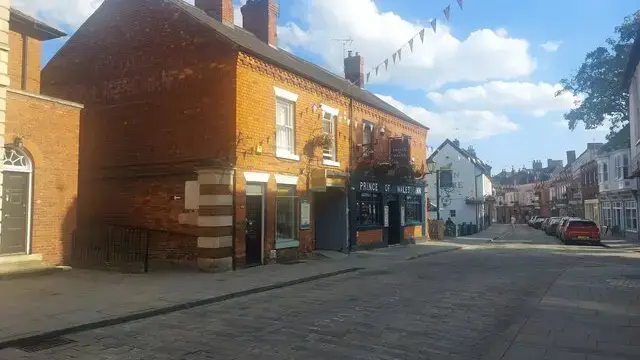
Lincoln is split by an escarpment and locals use the two halves as though they were separate towns. Uphill is the Cathedral, the castle and Bailgate. Downhill is the High Street, the West End and the Brayford.
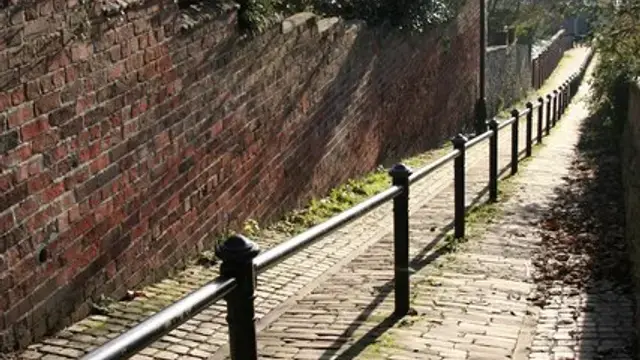
Steep Hill runs between them. It is cobbled, roughly one in seven and largely pedestrianised, and no removal van uses it. A crew working uphill comes round by the longer route, and a driver who has not done it before loses time discovering that.
Naming the half is the single most useful thing in a Lincoln enquiry. It tells the driver the route, the likely vehicle and roughly how long the carry will be.
- Say uphill or downhill in your first message.
- Give the full postcode, not just the street name.
- Flag permit parking around Bailgate.
- Name the largest item and the narrowest doorway.
How much does a man and van in Lincoln cost?
Hourly, with a one or two-hour minimum. National estimates put a solo driver near £64 an hour and about £78 with a second person (Checkatrade, 2026). Lincolnshire operators commonly price below a London-weighted average.
Uphill addresses tend to cost more, and for access rather than gradient: medieval streets, tight turns, restricted parking and a longer carry from wherever the van can legally wait.
Past a two-bed the hourly model stops working in your favour — compare removal companies in Lincoln instead. The removal costs guide lists prices by property size and the cost calculator checks a quote.
Get man and van quotes in Lincoln
LN goes a long way into the county
Lincolnshire is large and mostly rural, and LN covers a great deal of it. Village addresses are ordinary work for local drivers, but they bring their own constraint.
Single-track lanes, unmade drives and farmyard turns can defeat a van that handled the city without trouble. If either end is rural, say so and describe the approach — it changes the vehicle more often than the price.
It is also worth asking where a driver is actually based. LN covers so much ground that an operator advertising the whole area may be forty minutes from you before they start, and some charge for the approach. A Lincoln-based driver for a Lincoln move is usually the cheaper answer even at a slightly higher hourly rate.
Which LN areas do drivers cover?
The city as standard: Bailgate and the Cathedral quarter uphill; the West End, Monks Road, the Brayford and the university downhill; the estates at Ermine, Birchwood and North Hykeham.
Beyond it, the county villages and market towns are routine for most local operators, though coverage thins as you go east toward the coast.
Ask which towns a driver actually works rather than trusting the letters, because LN spans a lot of ground.
Which van size fits your load?
Short-wheelbase Transit for a room; long-wheelbase for a studio or a small one-bed; a 3.5-tonne Luton with tail-lift for a one or two-bed flat.
Uphill is where the smaller van wins outright. Bailgate and the lanes around it were laid out long before anything needed to turn in them, and a Luton is frequently the wrong tool rather than merely awkward.
Booking it without overpaying
Compare several prices and lead with the half of the city you are in. It is a two-word detail that changes the whole shape of the quote.
- Uphill or downhill, first line.
- Say if either end is a village address and describe the lane.
- Ask the minimum booking and part-hour rounding.
- Confirm fuel and waiting time are included.
- September is tight around the Brayford campus.
Student moves, and what makes them different
The Brayford campus generates a lot of single-room bookings, and they are their own kind of job rather than a small house move.
The loads are small but awkward: a mattress that will not fold, a desk chair, several boxes of books and a drying rack. Books are the thing to get right — use small boxes, because a large one is too heavy to carry safely and a driver is entitled to refuse it.
Access is the other half. Halls usually have a booking system for the loading bay and sometimes a lift with a time slot, and private houses in the West End are terraced with permit parking. Sort whichever applies before the van is booked.
September is the pinch point, and the second half of June is nearly as busy. In those fortnights the hourly capacity in the city is genuinely stretched, so three or four weeks of notice is the difference between choosing your slot and taking what is left.
One more thing worth knowing about uphill student addresses. Several of the houses around Bailgate and the Cathedral quarter are let to students, and they combine the small-load problem with the narrow-street problem. A smaller van and two people is usually cheaper there than one driver with a Luton he cannot park.