Man and Van Sunderland: Cottages, Back Lanes and Prices
Sunderland has two features that make an hourly booking go further than it would elsewhere: single-storey cottages with no staircase at all, and back lanes wide enough that many will take a van. Both shorten the job. Here is what a man and van in Sunderland costs and how to make the most of them.
The cottage advantage
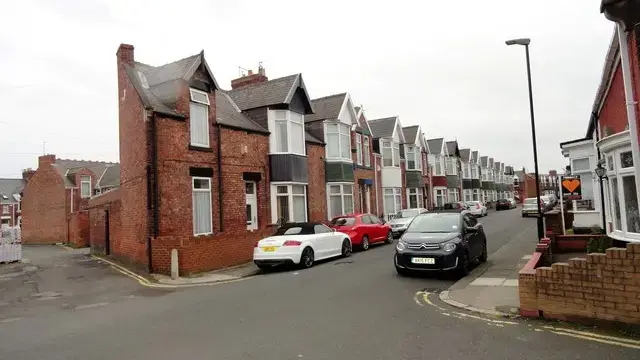
A Sunderland cottage is a single-storey terraced house, built in long rows for shipyard and pit workers and largely unique to Wearside. No staircase, no half-landing, no turning a wardrobe on a bend.
On an hourly booking that is money. The slowest part of most house moves simply is not there, and a three-room cottage can be cleared in the time a two-bed upstairs flat takes. Use the word when you ask — a driver who hears \u201cterrace\u201d prices for stairs.
- Say “cottage” rather than “terraced house” if that is what you have.
- Check whether the back lane behind you will take a van.
- Flag on-street parking at the front.
- Name the heaviest item rather than counting boxes.

How much does a man and van in Sunderland cost?
Hourly, with a minimum of an hour or two. National figures put a solo driver around £64 an hour and roughly £78 with a helper (Checkatrade, 2026). North East operators commonly price below a London-weighted average.
Because of the housing stock, a solo driver goes further here than in most cities. In a cottage with a usable back lane, one person and a van is often genuinely sufficient for a small move.
Past a two-bed, a fixed-price crew is cheaper per item — compare removal companies in Sunderland for that. The removal costs guide lists prices by property size and the cost calculator will check a quote.
Get man and van quotes in Sunderland
Back lanes: the second loading option
Behind most terraced rows in Sunderland runs a back lane, and they tend to be wider than the equivalent in other terraced cities — wide enough that a fair number will take a van.
That gives you something most terraced streets do not have: a choice. Loading from the back means no front step, no traffic and no competing for kerb space. It varies street by street, so measure yours rather than assuming.
Which SR areas do drivers cover?
The city as standard: Millfield, Hendon, Fulwell, Seaburn, East Herrington and the Doxford estates.
SR runs out to Seaham SR7, and Houghton-le-Spring and Washington sit just over the boundary in DH and NE. Most local drivers treat Tyne and Wear as one working area.
Newcastle is close enough that a cross-Tyne move usually prices as local rather than long distance, which is not true of every neighbouring city pair.
Which van size fits your load?
Short-wheelbase Transit for a room or a few large items; long-wheelbase for a studio or a one-bed; a 3.5-tonne Luton with tail-lift for a one or two-bed.
If your back lane takes a Luton, that is usually the best option — rear loading with a tail-lift and no stairs is about as quick as a house move gets. If it does not, a smaller van at the front often beats a larger one parked round the corner.
Booking it without overpaying
Compare a few quotes and describe what you actually have. Sunderland is one of the few places where the honest description makes the job cheaper rather than dearer.
- Use the word cottage if it applies.
- Say whether the back lane is usable and how wide.
- Ask the minimum booking and part-hour rounding.
- Confirm fuel and waiting time are inside the price.
- Mid-week and mid-month beats a month-end Friday.
Moves that follow a job
Nissan and the supply chain around it move people into and around Wearside on employment timelines rather than house-sale ones. That produces a particular kind of booking: a start date that will not move, and an address that is not ready yet.
The usual answer is a two-stage move — furniture into storage, the essentials into a short let, then a second smaller job a few weeks later. Plenty of local firms handle both halves, and pricing them together is normally cheaper than treating them as unrelated jobs.
If that is your situation, say so at the first enquiry rather than booking the first half and improvising the second. A driver who knows there is a second leg coming will usually quote both more keenly.
Storage pricing is worth asking about directly rather than accepting a headline rate. Some firms quote a weekly figure with the collection and redelivery bundled in; others price the two van journeys separately, which can double the real cost of a short stay. Ask which you are being quoted.
Parking fines and who pays them
On a terraced street with no legal space, a van sometimes ends up somewhere it should not be. It is worth knowing in advance whose problem the ticket is.
Most reputable operators treat a fine incurred at their own convenience as theirs, and one incurred because you assured them a space was legal as yours. Ask outright, because it is rarely written down.
Better still, sort the parking before the day. Many councils will suspend a bay or issue a temporary permit for a house move, usually for a small fee and with a week or two of notice.