Man and Van Wakefield: Hourly Prices and the Leeds Run
Wakefield sits ten miles from Leeds with motorway between, which makes one of the commonest local moves cheaper than it looks on a map. Within the city, the variable is the gradient down to the Calder. Here is what a man and van in Wakefield costs and where the savings are.
How much does a man and van in Wakefield cost?
Hourly, with a one or two-hour minimum. National estimates put a solo driver near £64 an hour and about £78 with a second person (Checkatrade, 2026). West Yorkshire operators commonly price below a London-weighted average.
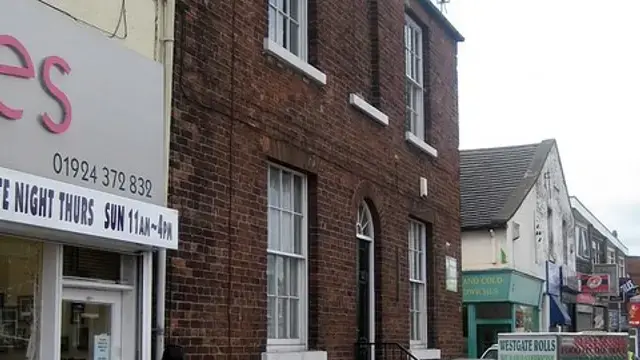
Access does most of the local work. The Victorian streets off Westgate and Horbury Road are on-street with no driveways; Sandal, Walton and Durkar are mostly semis where a van reaches the door.
Past a two-bed a fixed-price crew is cheaper per item — compare removal companies in Wakefield for that. The removal costs guide lists prices by property size and the cost calculator checks whatever you are quoted.
The Leeds run is not a long-distance job
Ten miles, motorway most of the way, and Wakefield drivers are in and out of Leeds constantly. There is no empty-return premium on a route that busy, so it prices as extended local work rather than a long haul.
Sheffield is twenty-five miles the other way and much the same story. If a quote for either treats it as cross-country, get two more — the difference on a two-bed can be considerable.
It is also worth asking drivers at the Leeds end. Both sides treat the route as home ground, and comparing across the two regularly turns up a real gap.
- Say which city the other end is in — it changes the pricing model.
- Get quotes from both ends for a Leeds or Sheffield move.
- Flag a steep street near the river.
- Name the heaviest item rather than counting boxes.
Get man and van quotes in Wakefield
The drop to the Calder
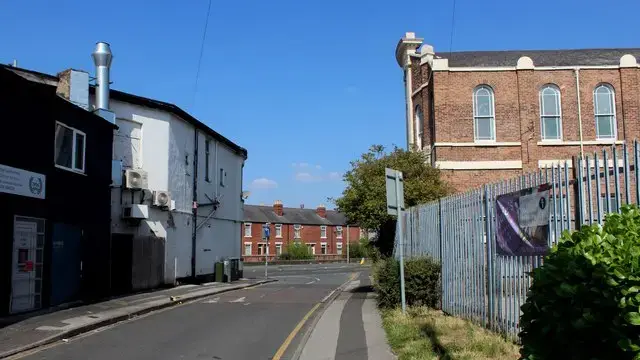
Wakefield falls away toward the river, and the streets off Westgate down to the Calder carry that gradient. On the steeper ones a loaded trolley is hard work and a tail-lift may not find level ground.
It is carrying time rather than driving time, and it is the detail most worth volunteering. A driver expecting a flat frontage who finds a one-in-eight will either be slower or revise the figure.
Which WF areas do drivers cover?
The city as standard: Westgate, Agbrigg, Sandal, Walton, Horbury, Ossett and Durkar.
WF then covers the Five Towns — Castleford WF10, Pontefract WF8, Normanton WF6, Featherstone WF7, Knottingley WF11 — and most local drivers work the district as a single area.
Because the district is compact and well connected, a cross-WF move usually prices as ordinary local work. Give both postcodes and the drivers will tell you.
Which van size fits your load?
Short-wheelbase Transit for a room; long-wheelbase for a studio or a small one-bed; a 3.5-tonne Luton with tail-lift for a one or two-bed flat.
On the steeper streets near the river the tail-lift is the thing to ask about, because it needs level ground to deploy safely. Where it cannot, everything is carried and the crew size matters more than the vehicle.
Booking it without overpaying
Compare several prices, and for a Leeds or Sheffield move compare from both ends. That single habit turns up more savings here than anything else.
- Say if the other end is Leeds or Sheffield.
- Mention the gradient if your street has one.
- Ask the minimum booking and part-hour rounding.
- Confirm fuel and waiting time are included.
- Month-end Fridays cost more, as everywhere.
Moving day with children or pets
It is the part of a move nobody plans and everybody remembers. A hallway full of boxes and an open front door is not a good environment for a toddler or a cat, and a driver working around either is slower.
The standard advice is the right advice: if you can, arrange for children and animals to be somewhere else for the loading and the unloading. A few hours with a relative costs nothing and removes the single biggest source of delay and anxiety on the day.
If that is not possible, set aside one room at each end that is cleared last and unpacked first, and tell the driver it is off the plan until the end. Cats in particular should be shut in with the door taped and a sign on it, because an open van and an open front door is exactly how a cat gets lost in an unfamiliar area.
Pack a box of the obvious things — kettle, mugs, chargers, medication, a change of clothes — and keep it in your own car rather than the van. It will be the most useful thing you own that evening.
If the move runs between Wakefield and Leeds, the day is usually short enough that children and pets can be collected at the far end rather than parked with someone for the whole of it. That is one of the quieter advantages of living ten miles from where you are going.
Either way, tell the driver at the point of booking. A crew that knows there is a cat in the back bedroom will keep the front door shut without being asked.