Man and Van Derry: One Bridge, Two Sides, Hourly Prices
If both ends of your move are on the same side of the Foyle, a Derry booking is as simple as they come. If they are not, everything goes over the Craigavon Bridge, because it is the only crossing that takes vehicles. Here is what a man and van in Derry costs and how the river changes the timing.
Same side or across the river?
The Foyle splits Derry down the middle. Cityside is west and BT48; Waterside is east and BT47. Saying which side each address is on is the most useful thing you can put in an enquiry, because it changes the shape of the job entirely.
Only one bridge carries vehicles between them. The Craigavon takes road traffic; the Peace Bridge is pedestrian and cycle only, so a van cannot use it whatever the map suggests. Every cross-river move funnels through the same crossing.
That is a timing problem rather than a difficulty. A driver who knows the city loads to avoid the bridge at the obvious hours; one who treats two miles as two miles can lose half an hour in the approach, and on an hourly booking you pay for it. If you can be flexible about the time of day, a cross-river move is worth starting early.
- Say BT47 or BT48 for each address.
- Mention if the move crosses the river — it changes the route planning.
- Flag a walled-city address, which needs a smaller van.
- Name the heaviest item rather than counting boxes.
How much does a man and van in Derry cost?
Hourly, with a one or two-hour minimum. National estimates put a solo driver near £64 an hour and about £78 with a second person (Checkatrade, 2026). Northern Ireland operators commonly price below a London-weighted figure.
Four things set the number: hours on the job, one person or two, van size, and access at both ends. In Derry there is a fifth that most cities do not have, which is whether the route crosses the bridge and when.
Past a two-bed the hourly model stops favouring you and a fixed-price crew with a bigger vehicle moves more per hour — compare removal companies in Derry for that. The removal costs guide lists prices by property size and the cost calculator will check whatever you are quoted against them.
Get man and van quotes in Derry
Inside the walls is a different vehicle
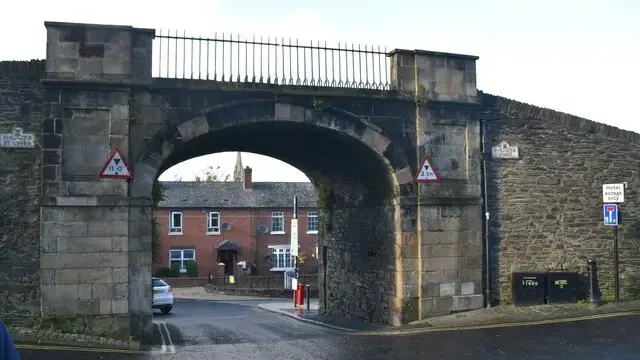
Derry has a complete circuit of seventeenth-century walls with gates through them, and the streets inside are narrow with restricted vehicle access in places. A full-size Luton is frequently the wrong tool rather than merely awkward.
Crews who work the city bring something smaller for those addresses and accept two runs, which is almost always faster than a large van that cannot get close enough to load. Say plainly if your address is inside the walls, because it changes the vehicle rather than just the schedule.
Outside them the picture is ordinary. The Waterside estates and the newer housing toward Strathfoyle have driveways and turning space, and a van backs up to the door without any fuss.
Which areas do Derry drivers cover?
The city on both sides as standard: Creggan, the Bogside and the Cityside generally, plus Clooney, Drumahoe and the Waterside estates.
Beyond it, coverage varies. BT is the postcode area for the whole of Northern Ireland, so a driver advertising BT might work the north west or the entire province. Limavady, Strabane and Coleraine are common enough destinations for local operators.
Ask which towns rather than trusting the letters, or simply give both full postcodes and let the drivers who cover the route be the ones who reply.
Which van size fits your load?
Three sizes cover nearly everything here. The smallest Transit is a single room or a few bulky pieces; a longer wheelbase copes with a studio; and the 3.5-tonne Luton with a tail-lift is the one most one and two-bed flats need.
The walled city is where the smaller van wins outright, and it is worth asking what the driver intends to bring if your address is in there. Everywhere else in Derry a Luton is straightforwardly the better choice.
If the move ends in Great Britain
That is not a man-and-van job. Furniture crosses by ferry from Belfast or Larne, the plan is built around sailings, and it usually runs across more than one day.
A local van is often still the right tool for the first leg — getting things to a depot or a container. Beyond that, the Belfast removal companies page sets out how the crossings work and what to ask about timing and cost.
Booking around the ferry, the walls and the bridge
Three Derry-specific things are worth settling at the point of booking rather than on the morning. Whether any waiting at the bridge approach is billable, what happens if a walled-city street turns out to be closed to vehicles at your hour, and whether the driver supplies boxes or expects you to have them.
Answers vary between operators and none of them are unreasonable — a driver sitting in traffic is not working, and a driver who cannot legally park is stuck. What matters is that you know the position before the clock starts rather than discovering it halfway through.
Dismantling is the fourth. A bed frame or a flat-pack wardrobe that has to come apart is time on the booking, and a driver who was not warned may not be carrying the right tools for it. Mention anything that will not fit through a door in one piece.
Booking it without overpaying
Compare several prices and lead with the two postcodes. In a city divided by a river with one usable crossing, that single detail tells a driver almost everything they need to plan around.
- BT47 or BT48 for each end, in the first line.
- Start early if the move crosses the bridge.
- Ask the minimum booking and how part-hours round.
- Confirm fuel and waiting time are inside the price.
- Say if either address is inside the walls.